The Ordinary-America Scavenger Hunt: Twelve Slightly Weird Things Worth Doing Before 2026 Closes
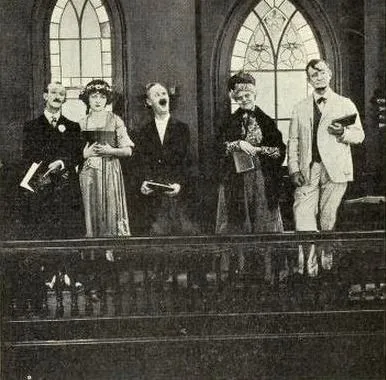
Photo: Mack Sennett Comedies / Associated First National, Public domain, via Wikimedia Commons
By late November 2026, the year has that worn-in feeling. The holidays are close, the daylight is thin, and the couch is making a strong case for itself. This is exactly when a person needs a small, low-budget field trip. You do not need a plane ticket or a national park pass. You need a town, any town, and a willingness to look at it sideways.
At Bemeyers Mawl, we are fond of the ordinary corner. The weird stuff is usually not in the guidebook. It is in the municipal building on a Thursday night, or the back aisle of a hardware store, or the cemetery behind the Presbyterian church. So here are twelve assignments for the remaining weeks of 2026. Do them in order, pick three, or save the list for a boring Tuesday. The point is not to check boxes. The point is to practice curiosity like a creative act.
1. Sit through a zoning board meeting for the plot
Find your town's meeting calendar online. Show up. Sit near the back. Listen to people argue about fence heights, driveway setbacks, and whether a shed counts as a structure. This is local theater with fluorescent lighting. Stay for public comment. Bring a notebook. You will leave knowing more about your neighbors than you did before, and possibly more about yourself.
2. Find the oldest grave in the town cemetery
Start with the local historical society, a Find a Grave search, or plain old wandering. Look for worn stones from the 1700s or 1800s. Read the names. Notice the carvings. Do not rub the stones. Leave a small pebble on one you like. Cemeteries are quiet archives, and every town has at least one story that begins with a name on a stone.
3. Run a gas station coffee taste test
Make a tiny scorecard. Rate temperature, bitterness, lid integrity, and the general vibe of the person behind the counter. Try two stations. Compare notes with a friend. This sounds silly because it is silly, but it also trains you to pay attention to something you usually ignore. That is the whole game.
4. Adopt a high school team for one night
Pick a sport you do not follow. Go to a game. Buy something from the booster club. Learn the mascot. Sit near the band if there is one. You do not need a kid on the team. You just need to be a person in the stands for a couple of hours. Small-town sports are one of the last places where strangers collectively lose their minds over a free throw.
5. Take the historic walking tour nobody takes
Most towns have a self-guided tour PDF buried on a website or a rack at the library. Download it. Follow the brass plaques. Look up at the porches and cornices. The tour will probably take forty minutes and teach you that the building you pass every day used to be a livery stable. That is a good return on investment.
6. Wander a hardware store with no project
Go to an Ace, a True Value, or whatever local place still smells like sawdust and fertilizer. Walk every aisle. Ask an employee what project they are working on. Buy one brass fitting for no reason. Hardware stores are museums of possible selves, and you are allowed to browse without building anything.
7. Ask a librarian for the town's weirdest legend
Go to the local history room. Ask the reference librarian for the strangest story in town. There is always one: a buried treasure, a haunted mill, a mayor who disappeared, a UFO sighting in 1962. Ask to see a clipping file or a microfilm reel. Photocopy one page if the machine still works. Libraries are the original search engines, and the librarians know where the good stuff is buried.
8. Eat diner pie at 3 p.m. on a weekday
The afternoon is the diner's secret hour. The breakfast crowd is gone. The dinner crowd has not arrived. The regulars are holding court. Order a slice of pie and coffee. Listen. You will hear at least one conversation that sounds like a short story. Tip well. Leave before the early bird special starts.
9. Find the town's strangest public art
Every town has one. A fiberglass bear. A mural of a local founder with unsettling eyes. A metal sculpture that looks like a giant whisk. Find it. Read the plaque. Take a photo. Rate it on a scale from charming to confusing. Public art is a town's collective subconscious, and it is usually free.
10. Visit a farm supply store and ask what is in season
Go to a co-op, a feed store, or a farm supply place. Look at the seed packets and the boots. Ask an employee what is in season or what people are buying. You will learn something about the food system and something about the people who live around you. Buy a bag of apples if they have them.
11. Ride a city bus to the end of the line
No destination. Just ride. Watch who gets on and who gets off. Notice the stops, the ads, the conversations. Bring a notebook but keep it in your pocket. The bus is a moving portrait of a town, and the end of the line is usually somewhere you have never had a reason to go.
12. Keep a one-week neighborhood observation log
For seven days, write down three things you notice within walking distance: a sound, a smell, a change. A new sign. A cat that has claimed a porch. The way the light hits the fire hydrant at 4 p.m. This is the smallest possible creative project, and it counts. You are not just consuming your town. You are reading it.
None of this is glamorous. That is the point. The ordinary places are full of detail if you stop treating them like background. You are not a tourist in your own town. You are a local with a notebook, which is a much stranger and better thing to be. So before 2026 signs off, pick one item. Bring a friend or go alone. Send us your field notes from whatever odd corner you find.